
TSIA Study Guide PDF Free: A Comprehensive Plan
Preparing for the TSIA 2․0 requires a focused approach, and a free PDF study guide can be invaluable․ Resources from College Board offer sample questions
covering quantitative, algebraic, geometric, and probabilistic reasoning․ Utilizing these materials boosts confidence and test-taking skills․
Understanding the TSIA 2․0
The TSIA 2․0 (Texas Success Initiative Assessment 2․0) is a crucial step for students entering Texas colleges and universities․ It assesses readiness for college-level coursework, specifically in reading, writing, and mathematics․ Understanding its structure and content is paramount for effective preparation․ The mathematics section, a key focus for many, is divided into four core areas: Quantitative Reasoning, Algebraic Reasoning, Geometric and Spatial Reasoning, and Probabilistic and Statistical Reasoning․
College Board, the organization behind the TSIA, provides valuable resources, including sample questions, to familiarize students with the test format and question types․ These resources, often available as free PDFs, are designed to mirror the actual testing experience․ Successfully navigating the TSIA 2․0 isn’t just about mathematical proficiency; it’s about understanding how those skills are applied and assessed within the context of the test․ A solid grasp of these fundamentals, coupled with targeted practice, is essential for achieving a score that accurately reflects your potential․
What is the TSIA 2․0?
The TSIA 2․0 is a standardized assessment designed to determine college readiness for students entering Texas higher education institutions․ Administered by College Board, it evaluates skills in reading, writing, and mathematics, ensuring students are adequately prepared for the rigor of college coursework․ Unlike previous versions, TSIA 2․0 is adaptive, meaning the difficulty of questions adjusts based on a student’s performance․
Specifically, the mathematics portion assesses four key domains: Quantitative Reasoning (ratios, proportions, percents), Algebraic Reasoning (equations, functions), Geometric and Spatial Reasoning (geometry, trigonometry), and Probabilistic and Statistical Reasoning (data analysis)․ College Board’s mission is to expand access to higher education, and the TSIA 2․0 plays a vital role in that endeavor․ Free sample questions, often found in PDF format on the College Board website, provide a realistic preview of the test’s content and format, aiding in focused preparation and building confidence․
Importance of a Free TSIA Study Guide PDF
A free TSIA study guide PDF is crucial for accessible and effective test preparation․ These guides, often provided by College Board, offer a cost-effective way to familiarize yourself with the test’s structure, content, and question types․ They allow students to practice at their own pace, identifying areas needing improvement without financial burden․
The benefits extend beyond content review; a good PDF guide will include sample questions mirroring the TSIA 2․0’s adaptive format․ This exposure builds confidence and reduces test anxiety․ Furthermore, these resources often highlight key mathematical concepts – quantitative reasoning, algebraic reasoning, geometric reasoning, and probabilistic reasoning – ensuring a comprehensive understanding․ Utilizing these materials empowers students to approach the TSIA 2․0 with a strategic mindset, maximizing their potential for success and college placement․

TSIA 2․0 Mathematics Sections

The TSIA 2․0 Mathematics test assesses four key areas: quantitative, algebraic, geometric, and probabilistic reasoning․ Mastery of these sections, through study guides, is vital for success․
Quantitative Reasoning
Quantitative Reasoning on the TSIA 2․0 focuses on practical math skills essential for everyday life and various academic disciplines․ This section tests your ability to calculate ratios, proportions, and percentages accurately and efficiently․ A strong understanding of these concepts is crucial, as they form the foundation for more complex mathematical problems․

Furthermore, the section requires you to skillfully identify, manipulate, and interpret linear equations and expressions․ This includes translating word problems into mathematical equations and solving for unknown variables․ Effective preparation involves practicing a wide range of problems involving these core skills․
Utilizing a TSIA study guide PDF specifically targeting quantitative reasoning will provide targeted practice and reinforce your understanding․ Look for guides that offer detailed explanations and step-by-step solutions to build confidence and improve your problem-solving abilities․ Mastering these skills is key to achieving a strong score on this portion of the TSIA 2․0․
Algebraic Reasoning
Algebraic Reasoning on the TSIA 2․0 assesses your proficiency in manipulating and solving a variety of algebraic equations․ This section demands a solid grasp of solving linear, quadratic, polynomial, exponential, rational, and radical equations – a comprehensive skillset․ Preparation should prioritize consistent practice with each equation type․
Beyond equation solving, the TSIA 2․0 also tests your ability to evaluate functions and apply algebraic principles to real-world problems․ This requires translating contextual information into mathematical expressions and interpreting the results accurately․ A TSIA study guide PDF focused on algebraic reasoning can provide targeted exercises․

Look for resources that offer detailed explanations of each concept and step-by-step solutions to complex problems․ Strengthening your foundation in algebraic manipulation and problem-solving is vital for success․ Consistent practice with a quality study guide will significantly improve your performance on this challenging section․

Geometric and Spatial Reasoning
The Geometric and Spatial Reasoning section of the TSIA 2․0 tests your ability to apply geometric principles and visualize spatial relationships․ This includes tasks like converting units within different measurement systems – crucial for accurate calculations․ You’ll also encounter problems involving perimeter, area, surface area, and volume of various shapes․
Furthermore, the TSIA assesses your understanding of geometric transformations and your ability to apply right triangle trigonometry․ A strong foundation in these areas is essential for success․ A dedicated TSIA study guide PDF should offer practice problems covering these concepts, alongside clear explanations of the underlying principles․
Focus on mastering formulas and practicing applying them to diverse scenarios․ Visualizing problems and sketching diagrams can also be incredibly helpful․ Utilizing resources from College Board, and supplementing with a comprehensive study guide, will build confidence and improve your problem-solving skills․
Probabilistic and Statistical Reasoning
The TSIA 2․0’s Probabilistic and Statistical Reasoning section evaluates your ability to interpret and analyze data; This involves classifying different types of data and constructing appropriate visual representations, such as charts and graphs, to effectively communicate information․ A solid understanding of data representation is key․
You’ll also be tested on your ability to compute and interpret probabilities, understanding the likelihood of different outcomes․ Furthermore, the section assesses your knowledge of measures of center – like mean, median, and mode – and measures of spread, such as standard deviation․
A quality TSIA study guide PDF will provide practice problems focusing on these concepts, helping you develop the skills needed to analyze statistical information․ Resources from College Board offer valuable sample questions․ Mastering these skills will significantly improve your performance on this section of the exam․

Utilizing a TSIA Study Guide PDF
A free TSIA PDF streamlines preparation, offering focused practice․ Look for guides with comprehensive content, sample questions, and clear explanations to maximize your study efficiency․
Finding Free & Reliable TSIA PDFs
Locating trustworthy, free TSIA study guides requires careful navigation․ The official College Board website (TSIA2 Mathematics Sample Questions) is the premier source, providing authentic sample questions directly from the test makers․ Beware of unofficial sources that may contain outdated or inaccurate information․
Numerous educational websites and platforms also offer TSIA preparation materials, but scrutinize their credibility․ Look for resources affiliated with accredited institutions or reputable test preparation companies․ Online forums and student communities can also point you towards helpful PDFs, but always verify the content’s accuracy against official College Board materials․
Prioritize PDFs that are recently updated to reflect the TSIA 2․0 format․ Ensure the guide covers all four mathematics sections – Quantitative Reasoning, Algebraic Reasoning, Geometric and Spatial Reasoning, and Probabilistic and Statistical Reasoning – as outlined by College Board․ Downloading directly from College Board guarantees the most reliable and current practice materials․
Key Features to Look for in a Study Guide
A comprehensive TSIA study guide PDF should possess several key features for effective preparation․ First, it must align with the TSIA 2․0 test blueprint, covering Quantitative, Algebraic, Geometric, and Probabilistic/Statistical Reasoning․ Look for detailed explanations of concepts, not just answers․
Effective guides include a substantial number of practice questions, mirroring the format and difficulty of the actual TSIA․ Solutions should be provided with step-by-step explanations, allowing you to understand how to arrive at the correct answer, not just what the answer is․
Diagnostic tests are invaluable, helping you identify your strengths and weaknesses․ The best PDFs will categorize questions by skill, enabling targeted practice․ Finally, a well-structured guide will offer test-taking strategies and tips for managing your time effectively during the exam, maximizing your potential score․
Effective Study Strategies with a PDF Guide
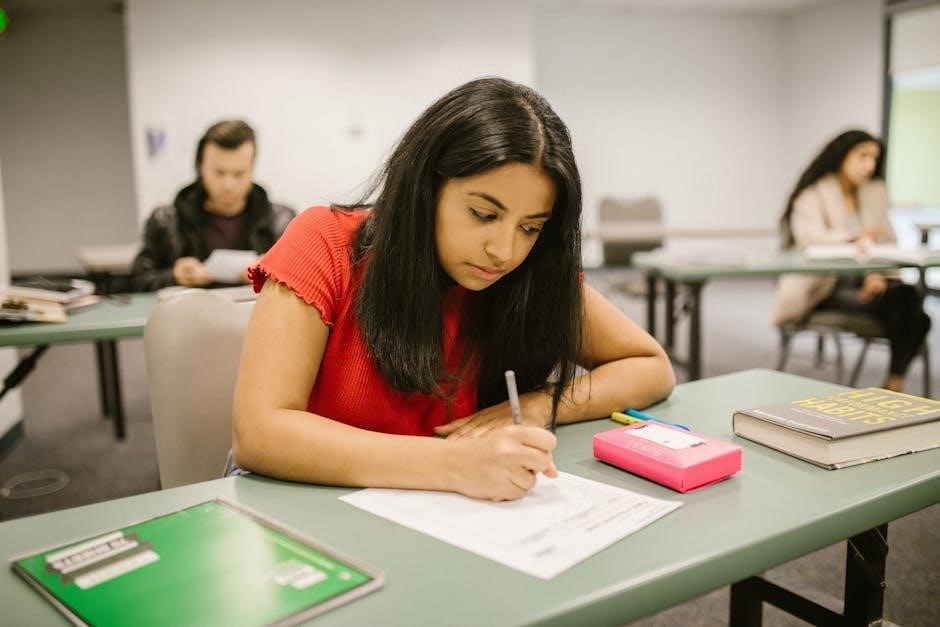
Leveraging a TSIA study guide PDF requires a strategic approach․ Begin with a diagnostic test to pinpoint areas needing improvement, focusing on the four core sections: Quantitative, Algebraic, Geometric, and Probabilistic Reasoning․ Create a study schedule, allocating more time to weaker areas․
Actively work through practice problems, avoiding simply reading solutions․ Instead, attempt each question independently, then compare your approach to the provided explanations․ This reinforces understanding and builds problem-solving skills․
Regularly review concepts and formulas, utilizing flashcards or spaced repetition techniques․ Simulate test conditions by timing yourself while completing practice sections․ Finally, analyze your mistakes to identify patterns and prevent repeating them on the actual TSIA 2․0 exam, maximizing your score potential․

Calculator Usage on the TSIA 2․0 Mathematics Test
The TSIA 2․0 permits calculator use, but understanding when to employ one is crucial․ Practice calculator skills alongside content review for optimal test performance․

Types of Calculators Permitted
Understanding acceptable calculator types is vital for the TSIA 2․0 Mathematics test․ While the official guidelines don’t explicitly list prohibited models, they emphasize a focus on fundamental mathematical principles․ Generally, most basic and scientific calculators are allowed, providing they don’t possess advanced programming capabilities or symbolic manipulation features․
Specifically, calculators that can store formulas or solve equations algebraically are typically not permitted․ The intention is to assess your understanding of the underlying concepts, not your ability to rely on a calculator’s pre-programmed functions․ A standard scientific calculator capable of performing basic arithmetic, exponents, logarithms, trigonometric functions, and square roots is usually sufficient․
It’s always best to check with your testing center for their specific policies regarding calculator usage․ Familiarize yourself with the functions of your chosen calculator before test day to maximize efficiency and avoid wasting valuable time during the exam․ A free TSIA study guide PDF can help you identify the types of calculations you’ll need to perform, allowing you to practice with your permitted calculator effectively․
Calculator Skills to Practice
Even with a permitted calculator, proficiency is key․ Don’t assume the calculator will solve everything for you; the TSIA 2․0 assesses mathematical reasoning, not just computational ability․ Focus on mastering essential skills like accurate data entry, utilizing parentheses correctly, and understanding exponent notation․
Practice converting between fractions, decimals, and percentages using your calculator․ Become comfortable with trigonometric functions (sine, cosine, tangent) and their inverses, as geometric problems often require these calculations․ Regularly practice solving algebraic equations, ensuring you can efficiently isolate variables and check your answers․
A free TSIA study guide PDF can provide practice problems specifically designed to test these calculator skills․ Pay attention to problems involving ratios, proportions, and unit conversions, as these frequently appear on the exam․ Remember, the goal is to use the calculator as a tool to enhance your problem-solving abilities, not to replace them․ Efficient calculator use saves time and reduces errors․
When to Use a Calculator Effectively
Strategic calculator use is crucial for maximizing your score on the TSIA 2․0․ While permitted, it’s not always the fastest or most efficient approach․ Avoid relying on it for simple arithmetic or problems easily solved mentally․ Prioritize using your calculator for complex calculations, such as those involving decimals, fractions, or square roots․
A free TSIA study guide PDF will often highlight problems where calculator use is particularly beneficial․ Focus on applying it to geometric formulas (area, volume), trigonometric functions, and statistical calculations․ However, always double-check your work, as incorrect data entry can lead to errors, even with a calculator․
Time management is key; don’t spend excessive time on any single problem․ If a calculation is too time-consuming, consider estimation or simplifying the problem before using your calculator․ Remember, the TSIA assesses your mathematical understanding, not just your calculator proficiency․